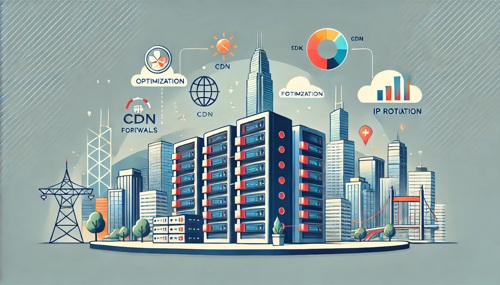
This article outlines how esports platforms operating in South Korea or connecting to native Korean game IPs can achieve low latency and high concurrency access through architecture design, transmission optimization, node deployment, and maintenance strategies, balancing cost and scalability, and facilitating precise network assurance decisions for engineering teams before and after launch.
How to assess the network needs of native Korean game IPs?
Start by analyzing traffic models and player distribution to calculate concurrency, average bandwidth, and peak periods. For core business (login, matching, real-time battle, reconnect), QPS and bandwidth baselines are established separately. Evaluate latency sensitivity based on game characteristics; for example, FPS and MOBA classes require higher millisecond-level latency. These results are transformed into specific network assurance metrics (P99 latency, packet loss rate, availability) to provide quantitative support for subsequent selection and budgeting.
Which access point is better suited for reducing latency?
In the South Korean region, prioritize localized access points (POPs) or direct connection data centers, reducing cross-border hop-ups by working at edge nodes in Korea. Interface with operator exchange centers uses multi-line redundancy, and when necessary, directly establishes peering or dedicated lines with game developers or Korean operators to avoid jitter and packet loss caused by unstable paths in the public internet.
Where can forwarding and acceleration nodes be deployed to support high concurrency?
It is recommended to deploy forwarding and acceleration nodes in the capital region and major player clusters (such as data centers around Seoul and Busan). By adopting intelligent load distribution and connection multiplexing, sessions remain at the nearest edge node to reduce long-link load. For high-concurrency requests, session caching, connection pools, and protocol optimizations (such as TCP tuning, UDP penetration, or QUIC) can be deployed at the edge to enhance concurrent capacity.
Why use dedicated lines and intelligent scheduling?
Dedicated lines can significantly reduce cross-border latency and path instability, making them a preferred option for ensuring critical real-time traffic. Intelligent scheduling, combined with BGP strategies, real-time link detection, and traffic allocation, can quickly switch during link anomalies, ensuring P99 latency and availability metrics are met. The combination of the two also reduces the impact of retransmission and delayed jitter on the player's experience.
How many resources and bandwidth need to be prepared according to peak capacity?
Preparing computing resources and bandwidth at 1.2–1.5 times the historical peak is generally more reliable, combined with automatic elastic scaling strategies to save costs. To maintain session and engage in real-time battles, it is recommended to reserve sufficient connection counts and network bandwidth based on concurrent peak values, and trigger automatic scaling of edge and backbone links when traffic surges.
How to optimize traffic and accelerate protocol layers?
Reduce single-user bandwidth consumption through compression, differential updates, and flow control; Replace traditional long connections with UDP or QUIC and perform forward error correction (FEC) and packet retransmission optimization to reduce the number of retries affecting latency. Congestion control and Nagle algorithm adjustments are applied to TCP services, while TLS multiplexing and session migration are implemented at the edge to reduce handshake overhead and improve connection establishment speed.
How to monitor and quickly recover to ensure continuous stability?
Establish full-link monitoring (client->edge->backbone-> game server), collect metrics such as latency, packet loss, jitter, QPS, and resource utilization, and coordinate with alerts and automated fault switching. Preset rollback and rehearsal mechanisms, and use grayscale and circuit breaker strategies to quickly isolate fault areas during sudden failures, ensuring other players remain unaffected.
Why do safety and compliance also affect the experience?
Compliant network access and DDoS protection can prevent service outages caused by large-scale attacks, while reasonable flow control and authentication strategies can also prevent resource abuse, indirectly maintaining low latency and high availability. Aligning with local Korean regulations and operator requirements to ensure compliance with cross-border traffic and content transmission.
How can we implement the operations and maintenance process for continuous optimization?
Form an SLA-driven SRE team, establish SLO and SLA metrics and regularly review them, and continuously tune network strategies by combining A/B testing with player-side experience feedback. Documented deployment and fault handling workflows enable rapid iteration and experience accumulation, ultimately transforming technical solutions into quantifiable business outcomes.
- Latest articles
- From The Perspective Of Content Creation, Bilibili Groups Mock The User Mentality And Platform Governance Behind Korea
- Recommended Skills Enhancement And Training For Female Technical Women Working In Servers In Malaysia
- Content Copyright And Compliance Considerations When Deploying Online Viewing Servers In The United States
- Cost-effectiveness Analysis Of Vietnam VPS Native IP For Overseas Deployment By SMEs
- How To Call A Japanese Server Phone Number: A Complete Guide To Quickly Getting Customer Service Hotlines And Important Notes
- Practical Operations And Promotion In Taiwan: How Native IPs Can Synergize With Proxy Pools To Improve Advertising Effectiveness
- Beginner's Guide: Common Methods For Detecting And Solving Korean VPS Bandwidth Issues
- Evaluate The Stability And After-sales Service Of Different Suppliers For Taiwan Server Game Virtual Hosting
- How To Use Japanese Site Cluster Servers With Multiple IPs To Achieve Stable Multi-store Operations
- Is It Good To Rent A High-defense Server In The US? Assess Resilience And Recovery Capability In Traffic Burst Scenarios
- Popular tags
-

Analysis Of The Reasons Why A Single Korean Movie With A Group Of Women Standing In A Row Is Recommended For Use In The Film Festival Section
from artistic value to technical support for screening and online dissemination, this article analyzes why "a group of women stand in a row" is suitable for the film festival section, and proposes a recommendation and implementation plan based on servers, vps, cdn and ddos defense, and recommends dexun telecommunications as a technical service provider. -

Advantages And User Experience Analysis Of Chichi Korea’s Internal Servers
analyze the advantages and user experience of the chicken game in south korea's internal servers, and explore its performance in terms of game performance, latency, community interaction, etc. -

Analysis Of Channels And Precautions For Purchasing Korean Native Ip
this article analyzes in detail the channels and precautions for purchasing korean native ip, including practical steps and precautions, to help users easily obtain the ip resources they need.